|
I was in New York this week, opening Tyk's
LEAP ON TOUR: The Future of MCP Governance
for a room of about thirty people who decide how their
companies will govern agents, most of them from finance.
My keynote was
Discovery Is the First Governance Control: you cannot govern an agent's access to something
you do not know you have. Afterward I sat on
a panel that kept circling one question, who owns the
agent, and Tyk wrote up
what New York taught them about MCP governance
— three owners, in practice, means nobody is accountable.
Then I came home to the blog pull and found the whole
industry having the same conversation. I read
12,596 posts from 2,758 provider blogs
this week, against 13,039 from 2,828 the week before.
"Governance" appeared in 48 titles. Some of that
is content marketing, but a lot of it was product: Google,
GitLab, JetBrains, Traefik, Saviynt and Workato each
shipped or positioned a way to govern what agents do.
|
|
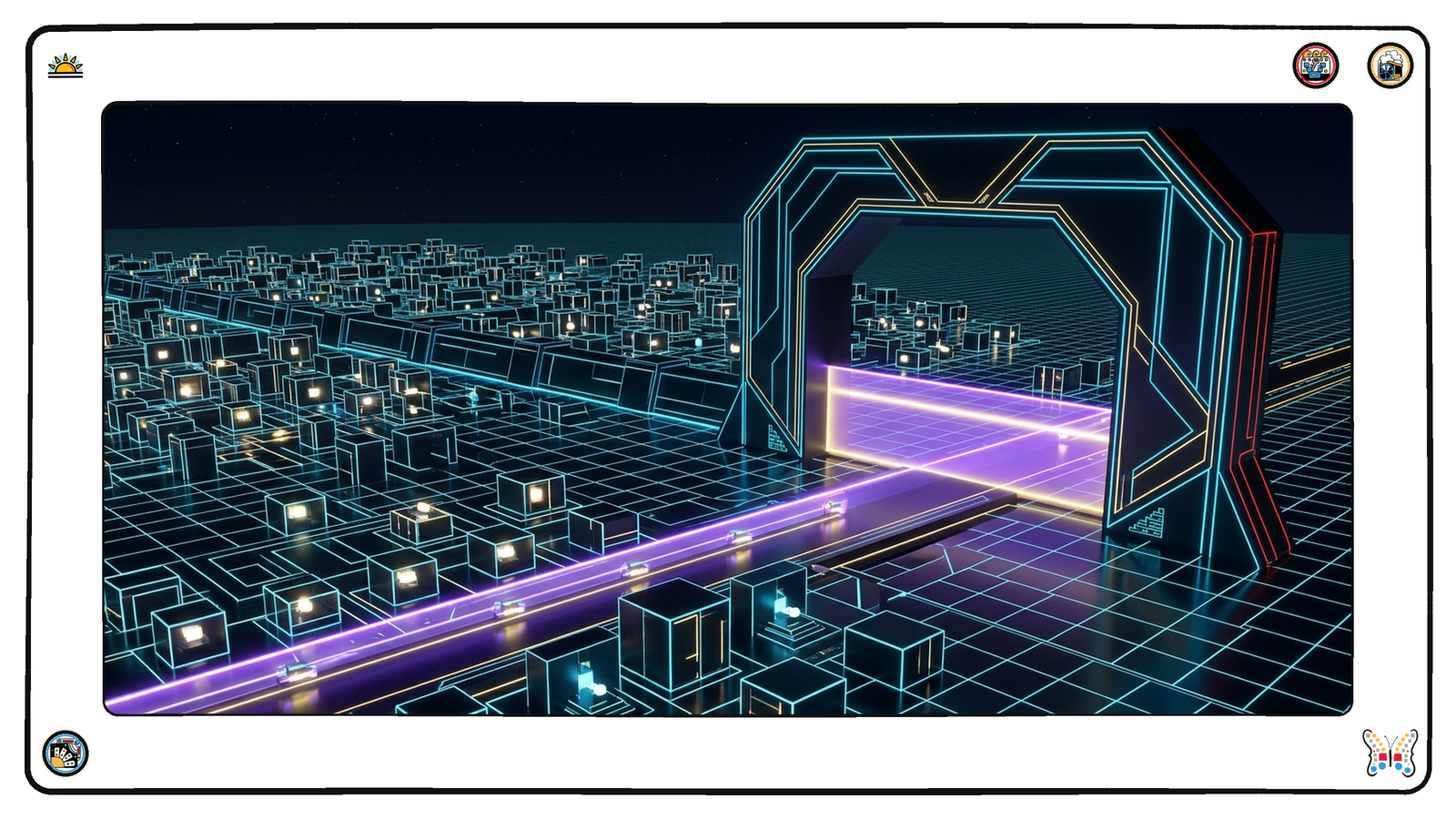
A dark neon grid city of small glowing enclosures, a
single luminous road carrying light-vessels out of
the city through one tall arch at its edge.
|
Everyone Is Selling Governance, and the Door Is Where It
Lives
The argument that clarified the week came from Traefik, in
two posts.
Harnesses and sandboxes will keep multiplying; your
governance should not: every team adds a harness with its own rules for reach,
credentials, cost and approval, and what every agent
shares is the way out.
Govern at the door, not in the sandbox, using NVIDIA's OpenShell as the example. That is
the gateway argument this newsletter has been making for a
month, now made about agents instead of APIs.
That is the point I made in New York, and the reason I
keep writing about the unglamorous layer underneath. Bruno
Pedro argued well that
API governance isn't just rule automation, and
I answered that most teams haven't automated the
rules yet
— which matters, because a governance dashboard can only
show you the agents and APIs that something already knows
about.
|
|
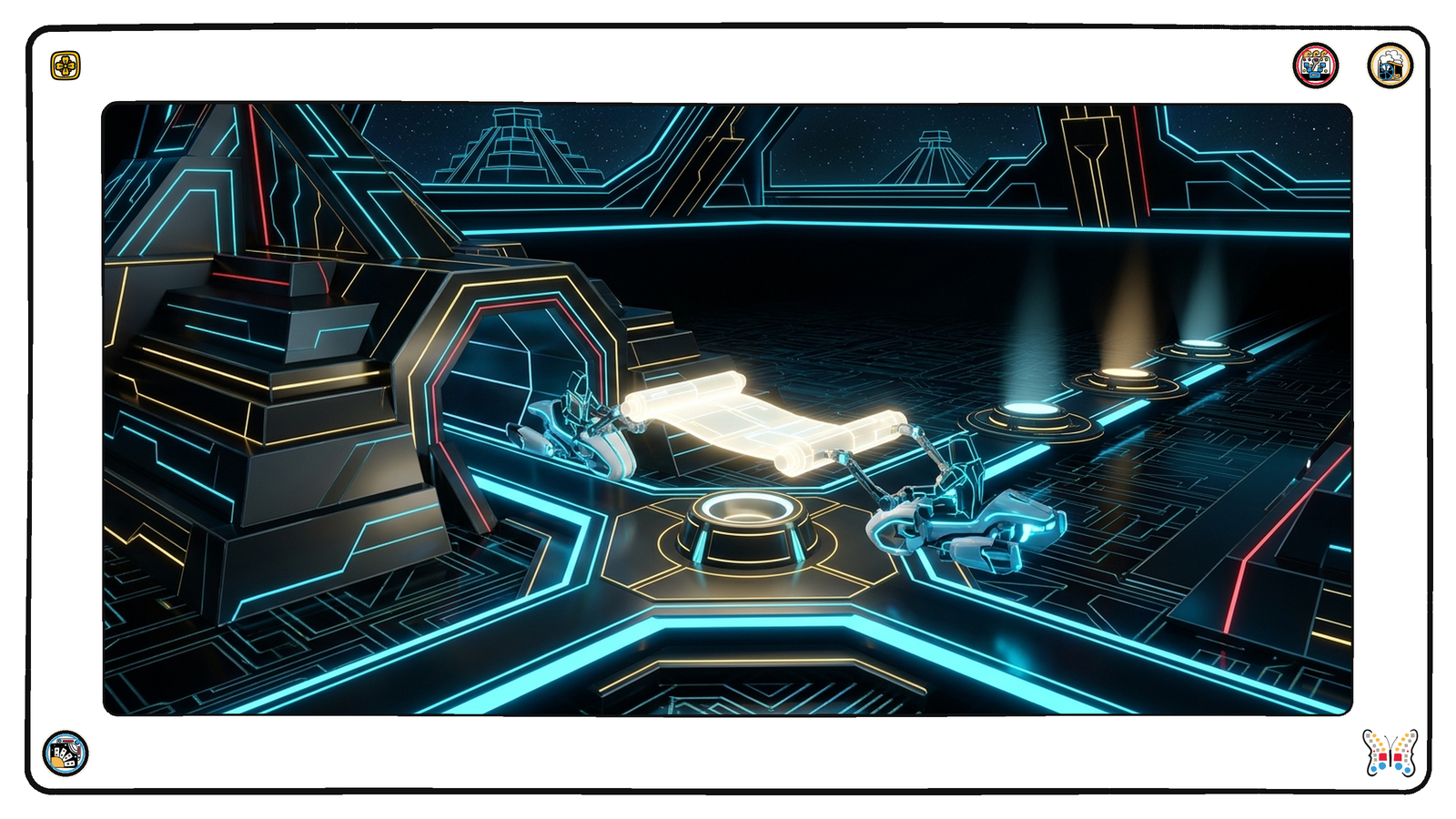
A dark neon hall where two small machines carry a
glowing scroll through an arched threshold toward a
central pedestal, a row of lit pedestals waiting
beyond.
|
The AI API Layer Is Consolidating
-
OpenAI donated Open Responses, its specification
for a common LLM API, to the Agentic AI
Foundation
— the Linux Foundation home that already holds MCP,
A2A and AGENTS.md. I wrote that
Open Responses gets a neutral home, and a
baseline. The foundation is quietly becoming where the agent
era's contracts live, and
Vultr joined it as a Gold member
the same week.
-
Decision models kept becoming ordinary API calls.
OpenAI published the launch post for its Decisions
API
— fast, focused, low-cost decisions for any
application.
Zoom showed its Decisions API routing customer
complaints,
Snowflake brought Decision Fast to Cortex AI
over SQL or REST,
SAP made RPT the decision model in Joule Studio
2.0, and
LiteLLM previewed JevRank, decision models behind its rerank API. Two weeks
ago I counted eleven request shapes for the same three
questions. Every one of these adds a twelfth.
-
I spent the week on what all of this does to the
answer itself. DeepSeek open-sourced DeepInfer, and
batch-invariant inference, deterministic sampling
and schema-constrained output move the hard problem
to the shape of the answer. Then I walked that through three regulated
industries:
healthcare,
payments and banking, and
insurance, where the shape of the answer is behind
a login.
|
|
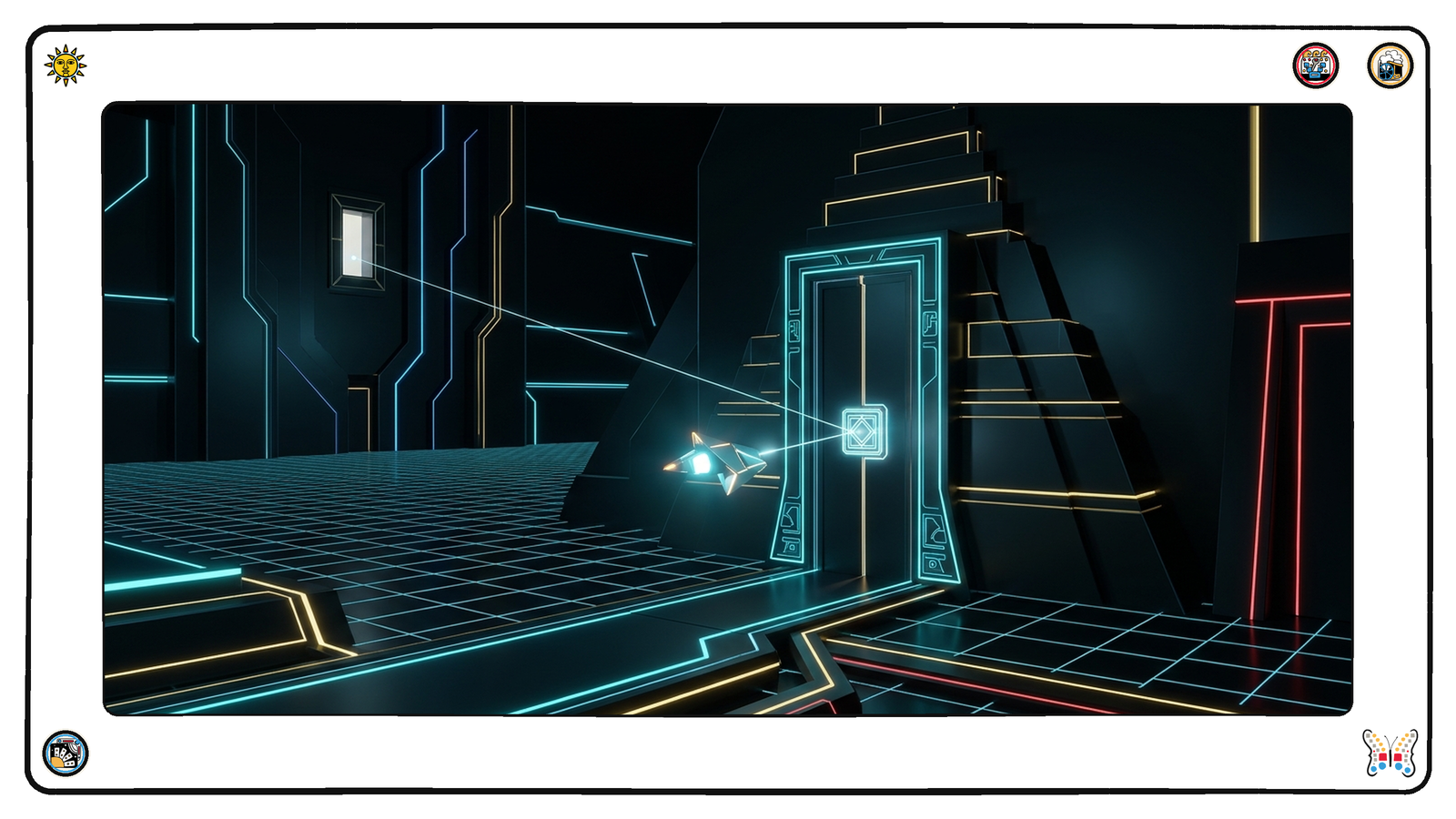
A small angular light-vessel presents a glowing seal
to a tall door set in a dark neon pyramid, a thin
thread of light running from the seal back to a lit
window high in the wall.
|
From the research: The Fundamentals of API Discovery
You can't govern, secure, or automate what you
can't find. After fifteen years working on API
discovery, I wrote down the fundamentals — why two decades
of directories never solved it, why inventory is
archaeology not a query, and where the old human problem
becomes urgent at machine scale: discovery for agents.
Read the paper
The Missing Piece Is Proof of Authority
Agent identity and agentic commerce spent the week
converging on the same gap.
My own work this week sat right in that gap.
The human in the loop is now one email
— the follow-up to the agent that got four APIs to trust
it, closing the part that was still broken: getting a
person's authorization in front of a provider. And
responding to Curity's Mike Goerlich:
trust you can carry has to be written down.
|
|
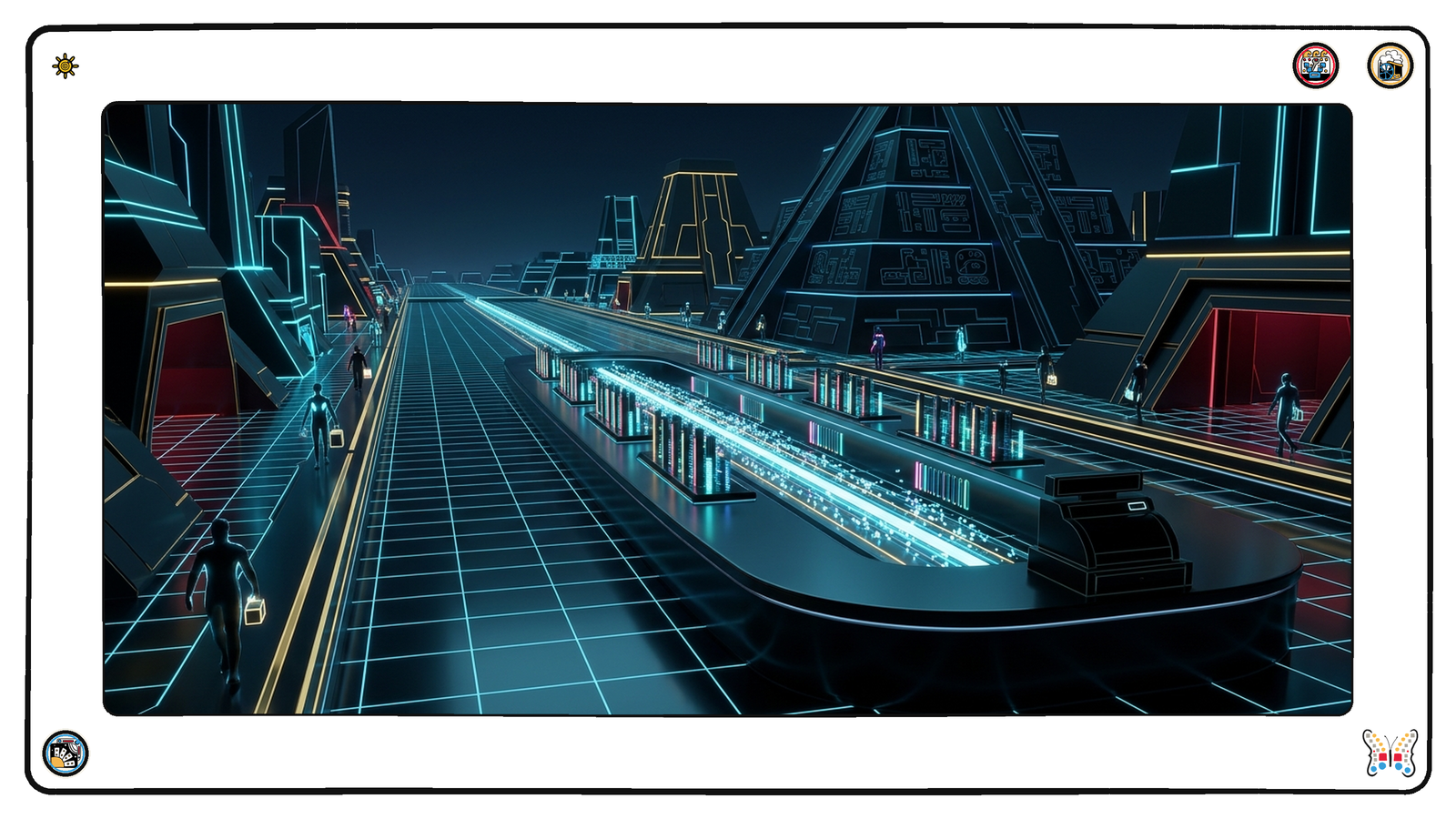
A dark neon avenue where a long counter of glowing
meters fills with streaming light while the dark
register at the end of the counter stays unlit.
|
Counted, Not Charged
Monetization came back into the conversation, mostly as a
question nobody has finished answering.
|
|
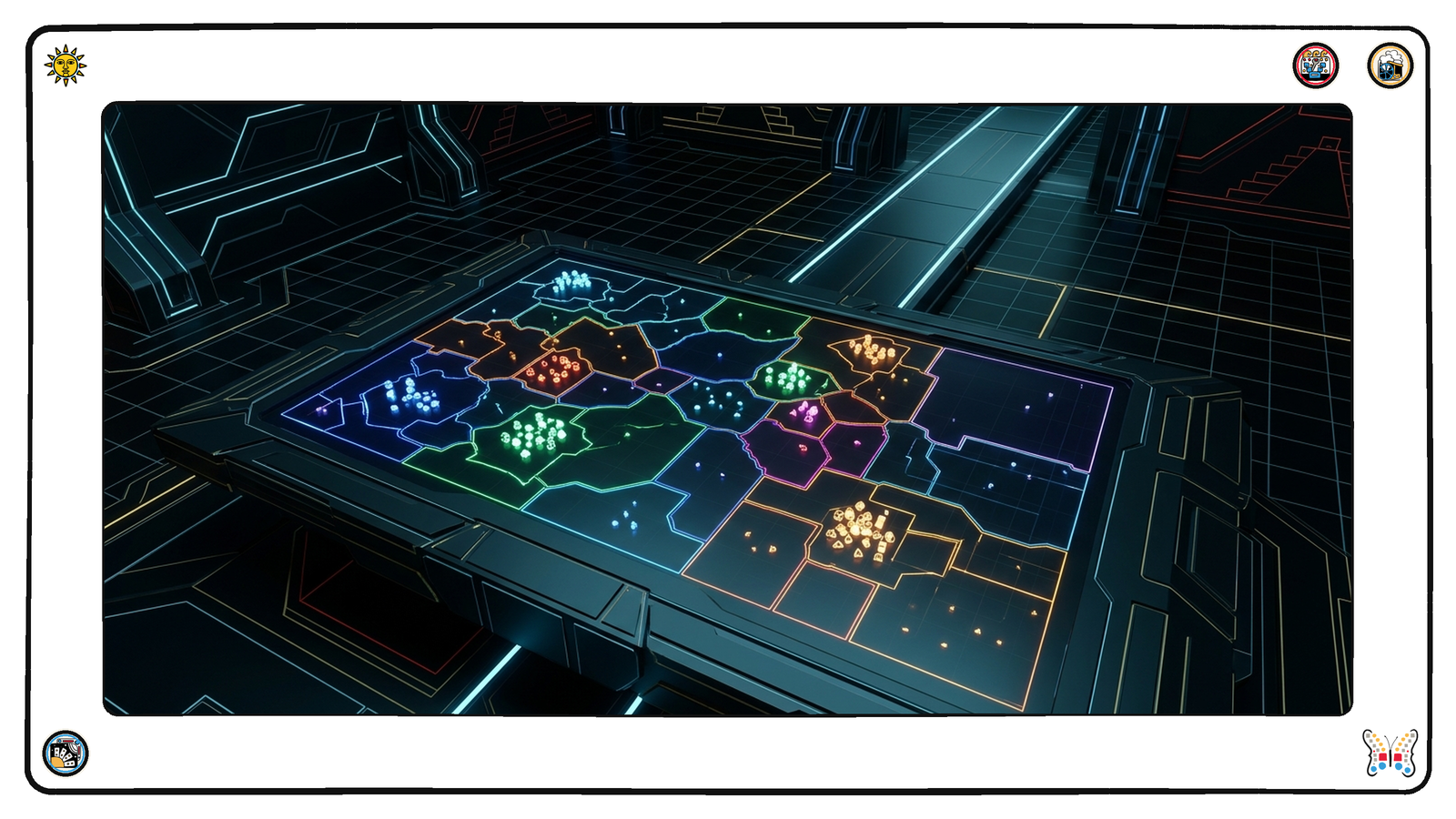
A dark neon table holding a luminous map divided
into many coloured regions, bright clusters of
markers in some regions and others nearly empty.
|
From My Desk: Eighty-Six Markets, and a Maturity Model We
Left on the Table
-
The Market layer grew fast. A week
ago the Kin Score's market dimension covered four
markets. It now covers eighty-six, and
every regulated market already publishes its own
map. Along the way:
the brands are missing from their own markets,
a listing is not a certification,
five thousand official SDKs and nine thousand that
are not, and
389 agent cards are live. Here is
where the Market layer stands, warts and all.
-
We had the agent protocol in 2008.
Leonard Richardson's maturity heuristic topped
out at hypermedia, and
we left it on the table. The follow-up is the one I would read:
we did not skip hypermedia, we moved it out of the
response
— into the catalogs, cards and descriptors this
newsletter writes about every week. Mike
Amundsen's
two axioms for designing for autonomy
belong in the same conversation.
-
Harnesses. Naresh Jain's
measurements of coding-agent harnesses are the most
useful thing I read on agents this year, and
the harness that works is a contract. I also built
a competitive landscape harness
for a provider standing up its own MCP server.
-
MCP in the field. A banker in New
York told me finance does not have enough useful MCP
servers, so I asked the catalog, and
they are right about the banks. Meanwhile only
four companies serve skills over MCP the way the
specification says, and
the first Poppy files have appeared, including one
a vendor wrote.
-
And the rest.
380 companies say Claude and 142 say Anthropic
— job postings name products, not companies.
The Incumbent and the Challenger: NCR Voyix and
Lightspeed.
One ask, and it is not for me.
If you depend on OpenAPI, please become a member of the
OpenAPI Initiative, and if your membership lapsed, come back. Every
governance product in the first section of this issue
reads a contract somebody had to standardize, and the
people who maintain that standard do it on very little.
Across 12,596 posts this week, OpenAPI was named in four
titles — one of them
APIAddicts deprecating its Sonar projects for OpenAPI
and AsyncAPI, which is what unfunded tooling looks like when it runs
out.
On the numbers: I count 137 titles naming
MCP this week, against 226 last week. Nearly all of that
drop is one MCP directory, vinkius.com, which published a
hundred listings the week before and none this week.
Without the directories it is 84 against 88 — flat.
See you next week.
🔌 APIs.io — find what you have before you govern
it
— My keynote this week was that discovery is the first
governance control, so here is the discovery. APIs.io
profiles tens of thousands of API providers — their
contracts, MCP servers, agent cards, rules and markets —
and searching it is free. If you run an API program, start
by looking yourself up: what the outside world can see of
you is the inventory every agent is already working from.
And if you want the same thing pointed inward at your own
estate, that is
APIs.io On-Premise.
Also on the shelf: The Fundamentals of API Evangelism
Your developer blog is the most underrated asset you have
— it compounds. Every post is a door that keeps letting
people in years after you wrote it. That's one thread
in my fundamentals of API evangelism paper.
Read the paper
You are receiving this because you subscribed to this
newsletter.
Unsubscribe
606 W 57th New York, NY 10019
|